AWS Expands Security Hub to Unify Multicloud Security Operations
Executive Summary
In today’s evolving cyber threat landscape, CISOs face the mounting challenge of securing workloads distributed across multiple cloud providers. AWS’s expanded Security Hub addresses this complexity by delivering a unified operations layer that aggregates risk signals and provides prioritized, near real-time insights into security posture across multicloud environments. This advancement enables security teams to focus on managing risks rather than juggling disparate tools, improving efficiency and response capabilities. The integration of automated analytics and extended vulnerability management further enhances proactive threat detection, making this a critical development for any organization adopting multicloud strategies seeking comprehensive threat intelligence report capabilities.
What Happened
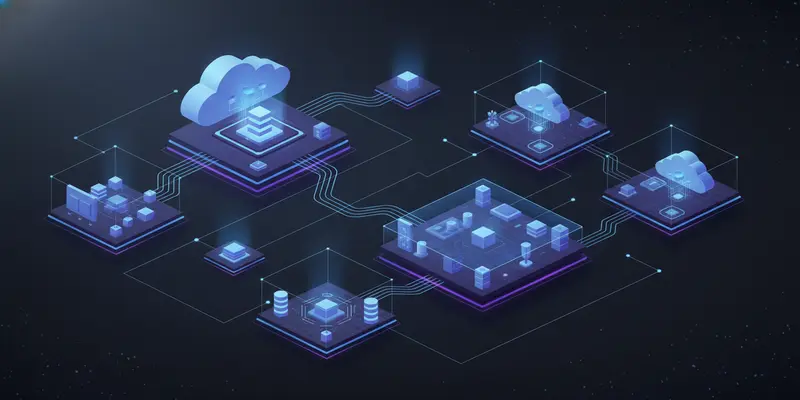
Amazon Web Services has expanded AWS Security Hub to act as a centralized security operations platform that consolidates security signals from diverse cloud environments into a single view. Traditionally focused on AWS-native services, Security Hub now offers a common data layer to unify alerts and risk indicators across multiple cloud providers. This includes enhanced Cloud Security Posture Management (CSPM) capabilities with expanded Amazon Inspector functionality covering virtual machines, containers, and serverless workloads. Additionally, AWS Security Hub Extended supports integration with third-party security vendors like CrowdStrike, Okta, and Splunk, allowing enterprises to manage external security tools with flexible pricing models. By streamlining visibility and risk prioritization, the upgrade aims to reduce operational overhead for security teams monitoring increasingly distributed and complex cloud workloads.
Why This Matters for CISOs
For CISOs, this expansion signifies a strategic shift toward simplifying multicloud security governance and operational management. As organizations increasingly deploy workloads across AWS, Azure, Google Cloud, and other platforms, fragmented security consoles and toolsets can delay incident detection and response. Having a centralized hub that integrates native and third-party data sources enables faster risk correlation, reducing alert fatigue and operational costs. The ability to continuously assess cloud security posture and vulnerability status across hybrid environments directly supports compliance and risk management initiatives. This unified approach resonates strongly with current cloud security threats, where attackers exploit configuration gaps and visibility blind spots inherent in dispersed infrastructures. Thus, AWS Security Hub’s enhancements align with pressing CISO priorities around reducing complexity while enhancing proactive risk mitigation.
Threat & Risk Analysis
The expanded Security Hub addresses several critical attack vectors relevant to multicloud environments. Threat actors frequently exploit cloud misconfigurations, vulnerable containers, and exposed serverless functions to infiltrate enterprise infrastructures. By aggregating telemetry from various native and third-party sources via APIs and a standardized data schema such as the Open Cybersecurity Schema Framework, Security Hub can correlate detections and vulnerabilities in near real time. This unified data ingestion facilitates visibility into exposure scenarios including internet-reachable assets regardless of cloud origin, helping identify possible attack pathways and prioritizing highest-risk vulnerabilities.
The move to consolidate security operations also mitigates risks associated with alert fatigue, a costly phenomenon where security teams drown in excessive notifications without clear prioritization. Automated risk analytics embedded in Security Hub help surface critical threats and reduce response times, improving overall security posture. However, integrating disparate tools also introduces supply chain risk considerations, as reliance on vendor APIs and the security of third-party integrations becomes paramount. Failure to maintain comprehensive coverage could generate gaps and a false sense of security.
In today’s threat landscape, where cloud workloads form complex attack surfaces, leveraging centralized multicloud security operations is essential. CISOs should evaluate integration capabilities closely to ensure effective ingestion of vulnerability management, configuration monitoring, and endpoint security telemetry across their environment. For a broader understanding of strategic security program risks, review our comprehensive patch management strategy and stay informed with daily cyber threat briefings.
MITRE ATT&CK Mapping
-
T1190 — Exploit Public-Facing Application
Attackers exploit vulnerabilities in publicly exposed cloud services and applications. -
T1078 — Valid Accounts
Threat actors leverage compromised credentials to access cloud workloads. -
T1560 — Network Sniffing
Monitoring cloud network traffic often reveals sensitive data exposures. -
T1553 — Subvert Trust Controls
Manipulation of cloud security controls can bypass protections in multicloud setups. -
T1083 — File and Directory Discovery
Reconnaissance of cloud environments to identify vulnerable assets. -
T1213 — Data from Information Repositories
Attackers target cloud storage misconfigurations to exfiltrate sensitive data.
Key Implications for Enterprise Security
- Centralizing multicloud security operations reduces complexity and operational costs.
- Integration of third-party security tools enhances visibility beyond native cloud environments.
- Consistent risk prioritization mitigates alert fatigue and improves SOC efficiency.
- Dependency on integrations demands robust vendor risk management.
- Maintaining alternative telemetry access is vital to ensure resilience during console outages.
- Continuous CSPM and expanded vulnerability management help close cloud security gaps.
Recommended Defenses & Actions
Immediate (0–24h)
- Assess current cloud security tool integrations to identify gaps in telemetry coverage.
- Prioritize patching and mitigation of high-risk vulnerabilities detected across all cloud assets.
- Review and update incident response plans to include multicloud scenarios.
- Educate security operations teams on the new capabilities and unified view benefits.
Short Term (1–7 days)
- Deploy and configure AWS Security Hub’s expanded CSPM and vulnerability scanning features.
- Integrate key third-party security tools to consolidate alerts within Security Hub.
- Implement automated risk analytics workflows to improve threat prioritization.
- Validate access continuity by establishing redundant telemetry and response mechanisms.
Strategic (30 days)
- Develop a multicloud security strategy aligned to governance frameworks and compliance mandates.
- Continuously refine threat intelligence ingestion and enrichment from trusted external sources.
- Evaluate vendor lock-in risks and ensure portability of security workflows and data.
- Invest in training and tooling to support unified security operations centers (SOCs).
Conclusion
The expansion of AWS Security Hub marks a pivotal advancement in tackling the operational complexity of multicloud security management. For security leaders, leveraging a centralized platform that integrates native and third-party signals is key to overcoming fragmented visibility, reducing alert fatigue, and maintaining robust cloud security defenses. This evolution underscores the necessity for a comprehensive cybersecurity report to guide strategic investment in consolidated security architectures. Proactive adoption will enable CISOs to safeguard evolving cloud estates efficiently while anticipating emerging threats with heightened situational awareness.
Start Your 14-Day Free Trial
Get curated cyber intelligence delivered to your inbox every morning at 6 AM. No credit card required.
Get Started Free