How CISOs Can Leverage Windows 11 Battery Health Reports
Executive Summary
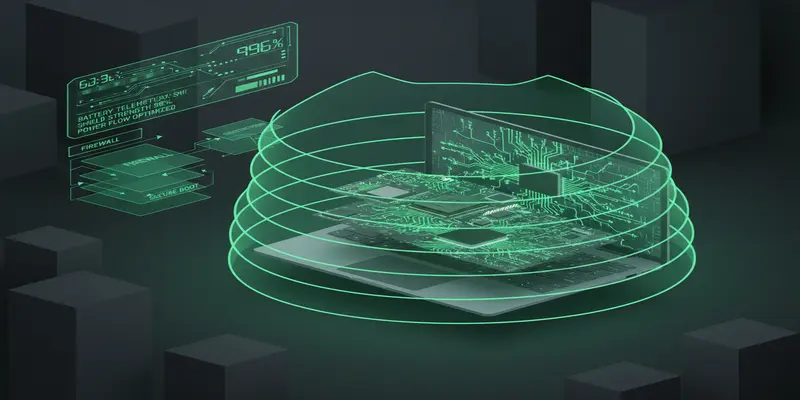
Device reliability often goes overlooked in enterprise cyber hygiene, but aging endpoints can result in disruption, downtime, and risk to security policies. A lesser-known element of the Windows 11 operating system—a native battery health reporting feature—offers CISOs and IT teams a no-cost method to monitor hardware health. This threat intelligence report outlines how to operationalize this diagnostic data into device lifecycle policies aligned with baseline assurance goals.
What Happened
A ZDNET editor recently spotlighted a native diagnostic feature within Windows 11 that generates a comprehensive battery health report via a PowerShell command. This report includes design capacity, current capacity, cycle counts, charge history, and projected runtime—critical insights on the physical state of laptop batteries.
This easy-to-execute command (powercfg /batteryreport) outputs a readable HTML file summarizing battery degradation, usage patterns, and replacement thresholds. The article highlighted that batteries with more than 20% capacity loss may be candidates for replacement, and that high cycle counts can signal imminent performance failures.
The utility provides valuable metrics without third-party software or enterprise-grade MDM tools, positioning it as a viable addition to preventative maintenance strategies.
Why This Matters for CISOs
In environments with large remote workforces or mobile-first teams, endpoint performance is foundational to secure operations. An overlooked battery failure can lead to unplanned downtime, data loss from improper shutdowns, or even skewed visibility in endpoint detection platforms. More critically, degraded devices still joining corporate networks via VPN or MDM may increase overall attack surface exposure.
For CISOs focused on operational continuity and endpoint visibility, integrating battery health metrics into device governance frameworks strengthens overall hardware assurance. Especially in industries like defense, healthcare, or financial services—where uptime and diagnostic predictability are paramount—leveraging native OS reporting tools aligns with secure endpoint lifecycle strategies and can compliment cloud security threats management workflows for distributed assets.
Threat & Risk Analysis
From a threat posture angle, seemingly mundane device failures remain a blind spot in organizational cybersecurity programs. In particular:
- Attack Vectors: Endpoints with degraded batteries may shut down unpredictably during patching, updates, or malware scan operations—leaving systems in inconsistent states.
- Exposure Scenarios: If a device fails mid-VPN session without security event sync, audit trails become fragmented. This limits security team's ability to detect lateral movement or unauthorized access attempts.
- Supply Chain Relevance: Asset intelligence—such as cycle count and device aging—can help identify vulnerabilities in hardware procurement or staging processes (especially with BYOD assets or remote onboarding).
- Attacker Motivations: Threat actors may opportunistically target stale or poorly performing endpoints excluded from routine updates and visibility audits.
- Enterprise Impact: Downtime on endpoint fleets at scale degrades business continuity, increases help desk costs, and dilutes SOC telemetry, undermining detect-and-respond confidence.
Integrating endpoint health reconnaissance into daily cyber threat briefings and MDM telemetry can reduce undetected blind spots in endpoint coverage.
MITRE ATT&CK Mapping
- T1082 — System Information Discovery
Used to gather hardware-level data, such as power state or capacity, for device profiling. - T1496 — Resource Hijacking
Devices with battery issues may perform sub-optimally, impacting threat detection platforms or sandbox testing reliability. - T1070.004 — File Deletion (Log Files)
Unexpected shutdowns may result in partial or corrupted event logs during battery-related crashes. - T1203 — Exploitation for Client Execution
Devices stuck in delayed-patching cycles due to system instability may remain vulnerable to known client-side exploits. - T1562.001 — Impair Defenses: Disable or Modify Tools
Power failures may disrupt security update scheduling, leaving controls out of sync.
Key Implications for Enterprise Security
- Proactively identifying battery degradation reduces unmonitored endpoint shutdowns.
- Battery metrics assist zero-touch provisioning teams in identifying soon-to-retire devices.
- Lifecycle awareness strengthens patch efficacy—preventing update failure due to abrupt power loss.
- Device degradation insight enables better capacity planning for remote support and SOC tool coverage.
Recommended Defenses & Actions
Immediate (0–24h)
- Run the
powercfg /batteryreportcommand on test endpoints to validate output readability and usefulness. - Cross-check results with your endpoint configuration management system to confirm devices nearing lifecycle thresholds.
- Add a battery report check for high-trust devices involved in compliance-driven workflows (e.g. DevOps boxes, trading stations).
Short Term (1–7 Days)
- Incorporate battery health metrics into your asset management dashboards.
- Develop alerting logic for endpoints with >20% capacity degradation.
- Flag high-cycle-count laptops to IT for backup/continuity assurance before critical operations.
Strategic (30 Days)
- Define policy thresholds (e.g., <80% full charge or >400 charge cycles) to trigger pre-emptive device refresh.
- Update hardware baselines with battery longevity statistics to align purchasing decisions with reliability SLAs.
- Integrate health checks into your comprehensive patch management strategy to prevent mid-patch failures.
Conclusion
Device stability is a foundational—but often underestimated—pillar of cybersecurity hygiene. Leveraging built-in tools like the Windows 11 battery health report presents an opportunity to improve endpoint resilience using resources already at your disposal. This cybersecurity report reminds CISOs and IT leads that secure infrastructure extends past software layers—it includes knowing how long your hardware can go the distance under pressure.
Start Your 14-Day Free Trial
Get curated cyber intelligence delivered to your inbox every morning at 6 AM. No credit card required.
Get Started Free