Instagram Data Dump & Reset Spam: What CISOs Must Know
Executive Summary
Over the past week, Instagram users began receiving unexplained password reset emails, sparking concerns amid the discovery of 17 million leaked user records on the dark web. While Meta claims the events are unrelated, this threat intelligence report highlights key exposure indicators, phishing risk amplification, and response recommendations for CISOs monitoring user account compromise and brand impersonation trends.
What Happened
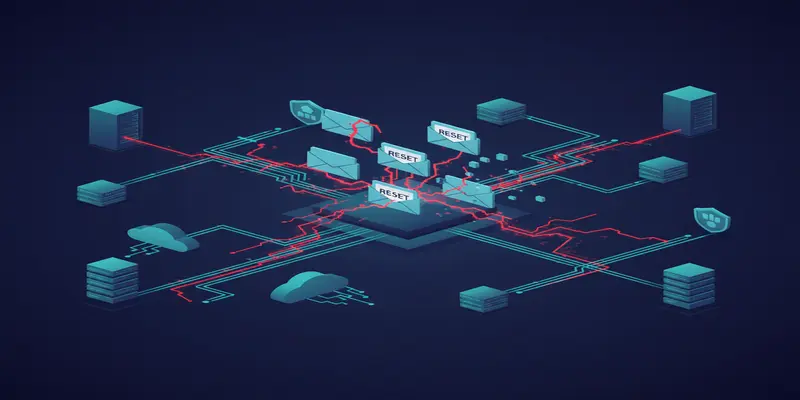
Beginning last week, Instagram users globally reported receiving password reset emails they didn't initiate. The emails came directly from Instagram, prompting users to verify whether they requested the reset. Simultaneously, a cybercriminal known as “Solonik” posted a dataset on a dark web forum, claiming to be selling information related to 17 million Instagram profiles. The exposed details include usernames, full names, user IDs, email addresses, phone numbers, and partial geolocation data. Notably, no passwords were found among the dataset.
Despite the curious timing, Meta announced via X (formerly Twitter) that the emails stemmed from an issue allowing a third party to trigger password reset notifications to some accounts—not a breach. According to Malwarebytes' analysis, the dataset appears to be a mosaic of previous breaches, potentially circulated in private forums ahead of the public leak.
Although Meta insists the two incidents are not directly linked, the overlap creates opportunities for cybercriminals to exploit the confusion, distribute phishing emails, and harvest credentials from unsuspecting users.
Why This Matters for CISOs
For CISOs, this convergence of legitimate platform activity and leaked PII magnifies organizational risk across multiple vectors: phishing, impersonation, and supply chain reputation. Even though Instagram is a consumer product, CISOs should monitor for business impacts, particularly:
- Fake brand impersonation attempts targeting employees
- Marketing team or executive social accounts tied to business email domains
- Credential reuse risks from exposed emails linked to enterprise accounts
More critically, this signals an evolving tactic where attackers exploit legitimate platform behavior to blend malicious actions—a scenario that underscores the importance of robust breach response and enterprise data protection controls.
Given the exposed data and timing, this incident fits the profile of a modern breach response CISO concern.
Threat & Risk Analysis
This incident creates a high-potential environment for phishing attacks. Attackers now have access to millions of verifiable Instagram account details, making social engineering more convincing and targeted.
Attack vectors:
- Phishing emails mimicking Instagram, leading users to credential-harvesting pages.
- Credential stuffing campaigns targeting accounts on other Meta platforms due to email reuse.
- Brand impersonation schemes aimed at executives or public-facing staff using profile details.
Exposure scenarios:
- Corporate Instagram, WhatsApp, or Facebook accounts registered with work emails could be redirected, locked out, or hijacked.
- Marketing or influencer teams with admin roles may be phished or deceived, becoming initial intrusion points.
Supply chain relevance:
- Organizations leveraging Instagram for influencer campaigns, brand marketing, or app integrations inherit secondary exposure risk.
Attacker motivations likely fall into:
- Profit from resale or further leaks of verified user data.
- Credential harvesting for broader ATO (Account Takeover) operations.
- Exploiting the confusion for fast-moving phishing schemes.
Enterprise impact:
- Reputational damage via impersonation or misinformation.
- Help desk escalations from employees reacting to phishing attempts.
- Potential data loss from session hijacking on linked business assets.
For a broader view of threats that leverage timing and confusion, refer to our daily cyber threat briefings and guidance on comprehensive patch management strategy.
MITRE ATT&CK Mapping
- T1586.002 – Compromise Accounts: Social Media Accounts
Attackers use leaked IG data to attempt account hijack via password reset and phishing. - T1566.001 – Phishing: Spearphishing Attachment
Likely follow-up phishing emails with lures built around fake password reset notifications. - T1496 – Resource Hijacking
Hijacked social accounts may be used to amplify further fraud or malware propagation. - T1110.003 – Brute Force: Credential Stuffing
Utilizing leaked emails and usernames across platforms to test for reused credentials. - T1595.002 – Active Scanning: Vulnerability Scanning
Automation of password reset functionality abuse before the patch by Meta indicator. - T1087.003 – Account Discovery: Email Addresses
Discovery of corporate or enterprise-linked emails within leaked datasets.
Key Implications for Enterprise Security
- Expect phishing campaigns mimicking password reset alerts in coming weeks.
- Exposed employees may be targeted with impersonation scams or fake verification links.
- Attackers are leveraging public datasets and timing alignment for psychological manipulation.
- Data linkage between IG, WhatsApp, and Facebook adds interconnected account risk.
- Consumer-facing social presence may open doors to business-level compromise vectors.
Recommended Defenses & Actions
Immediate (0–24h)
- Notify employees of the Instagram reset email wave and associated phishing risks.
- Advise social media, marketing, and executive teams to change IG passwords from within the app—not via any email link.
- Review enterprise Instagram account settings for 2FA enforcement.
Short Term (1–7 days)
- Perform a Digital Footprint scan to determine organizational exposure in breached datasets.
- Reassess third-party social media management tools for secure access controls.
- Audit Meta platform usage across departments—track which teams use what, and how.
Strategic (30 days)
- Update social engineering awareness training to include phishing through platform lures.
- Enforce 2FA and credential rotation policies on integrated marketing/social platforms.
- Establish policy guidelines for managing social media accounts under company domains.
Conclusion
Incidents like this highlight the persistent challenge of securing both corporate and consumer-aligned systems in a blurred threat landscape. While no passwords were leaked, the presence of complete user profiles—and the exploitation of legitimate service behaviors like password resets—represent a fertile ground for threat actors. CISOs must respond not only with technical fixes but also align enterprise awareness to address human factors. Monitoring brand-related exposure and enacting preventive controls now will prevent costlier breaches later—as detailed in every cybersecurity report that examines phishing readiness and data misuse escalation models.
Start Your 14-Day Free Trial
Get curated cyber intelligence delivered to your inbox every morning at 6 AM. No credit card required.
Get Started Free